


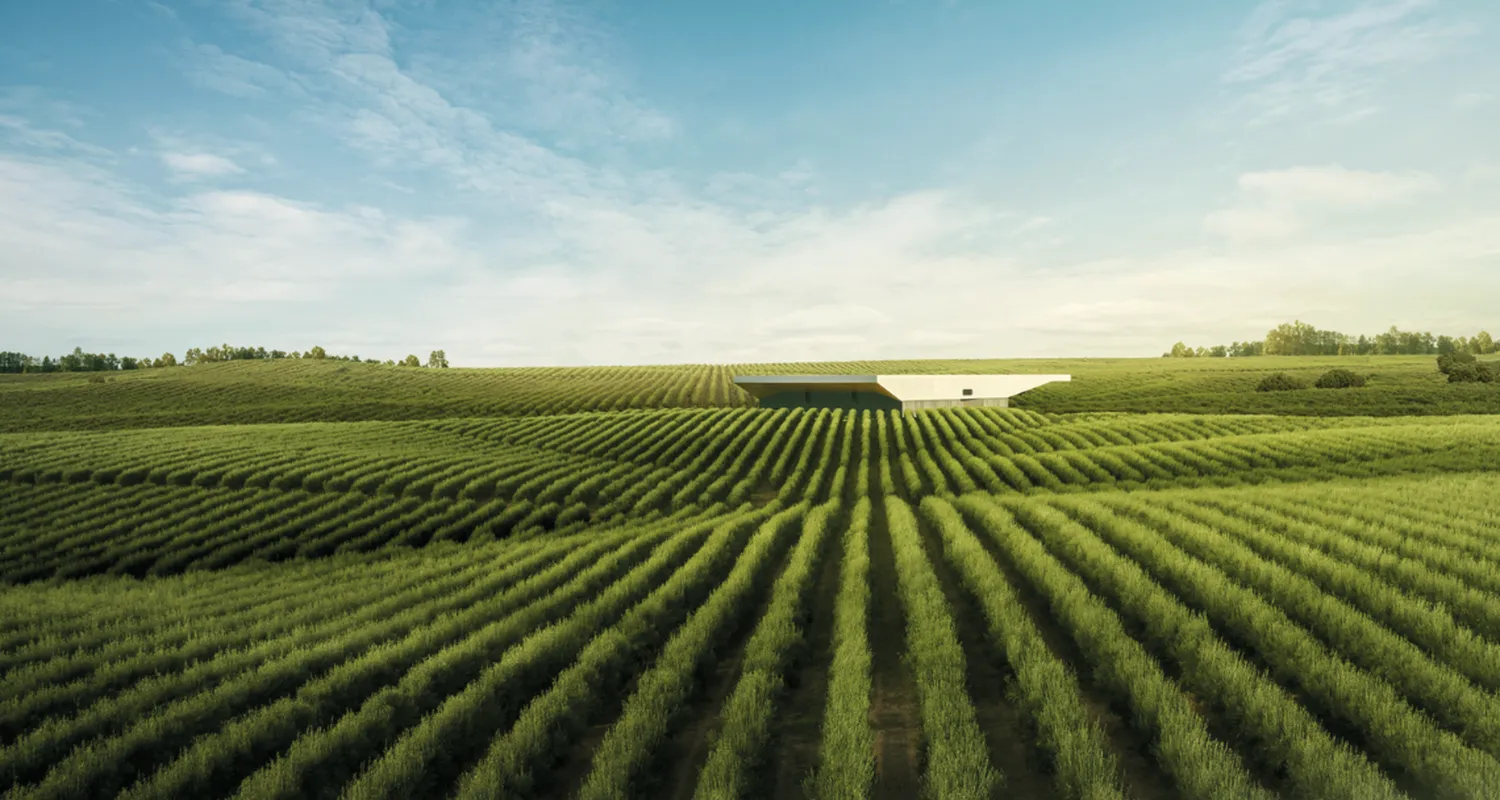
Building a global leader in the olive oil and edible oils market

Joao Antunes, Managing Partner at Kestria Portugal, Thrive Partners, interviewed Jorge De Melo, CEO of Sovena Group, the evolving dynamics of the global edible oils market, the role of sustainability and innovation in agribusiness, and the leadership principles required to navigate an increasingly demanding and rapidly changing industry.
The conversation also explored how companies in the sector are balancing global scale with local adaptation, while investing in resilience, technology and long-term value creation.

Recent studies point to sustained growth in the global edible oils market. How do you interpret this trend and what implications does it have for Sovena’s strategic positioning?
The evolution of the edible oils sector is linked to structural trends such as population growth, increasing purchasing power and greater access to food products. This context has contributed to a global expansion in consumption, albeit within a highly volatile environment, strongly influenced by climatic and geopolitical factors.
In this scenario, Sovena positions itself as a relevant player in the edible oils and olive oil segments, with a strong international presence and a particular focus on strategic geographies such as Iberia, Africa and South America. Our scale, control across the value chain and ability to adapt enable us to respond to different market dynamics and reinforce our competitiveness.
Sovena operates today across multiple categories — from olive oil to vegetable oils and avocado oil. How do you define your role within this broader “fats & oils” ecosystem?
ovena is a Portuguese company operating globally in the edible fats segment, with an approach focused on quality, competitiveness and alignment with consumer needs. Over the years, we have consolidated a strong presence in both olive oil and vegetable oils, seeking to meet consumer needs in a healthier and more competitive way, while offering a diversified portfolio tailored to different markets.
We closely monitor the evolution of these categories and consumer preferences. In that sense, we aim to bring the best solutions to market and have been exploring new areas, such as avocado oil, always with a focus on complementarity and sustainable value creation.
As a global player with strong roots in Portugal, how do you balance international scale with the need to adapt to local specificities?
International scale is essential to ensure competitiveness and a level of service that few competitors can match, while closely following innovation in our sector.
At the same time, we believe local adaptation is critical to success. Each market has its own characteristics and consumption patterns, so we strive to develop solutions tailored to those realities. For example, a Brazilian consumer looks for olive oil for different uses than a Spanish consumer, and a Fula consumer in Portugal uses oil very differently from a Fula consumer in Angola. Companies must be able to adapt to each market. It is this combination of a global vision with local execution that allows us to respond efficiently to very different markets.
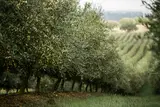
Sustainability, vertical integration and resilience in agribusiness
To what extent has vertical integration across the entire value chain been critical in ensuring quality, flexibility and competitiveness?
Vertical integration is one of Sovena’s key differentiating factors. It enables us to operate across the entire value chain, ensuring consistency in quality, operational flexibility and greater responsiveness to the market.
This approach, combined with our global presence, allows us to serve different geographies and consumers consistently, even in a demanding and uncertain context, as demonstrated by recent periods of significant geopolitical instability.
In a sector increasingly exposed to climate change and geopolitical disruptions, how has your approach to risk management and rapid adaptation evolved?
The agri-food sector has been particularly exposed to instability, from climate-related challenges to geopolitical tensions and supply chain disruptions.
Our approach focuses on strengthening business resilience, namely through market diversification, optimisation of supply chains and improved operational efficiency. At the same time, we have been increasingly integrating sustainability and innovation into our decision-making, which enables us to better prepare the organisation to respond to these challenges.
Resource scarcity, particularly water, is a critical issue. How do you balance productivity with long-term soil preservation and biodiversity, and how does this shape your agricultural and investment decisions?
The efficient management of natural resources is central to our operations. We work with agricultural practices that promote more efficient use of resources and a responsible approach to production.
This includes, for example, the use of real-time data — such as monitoring soil moisture, weather conditions and plant water status — to adjust and optimise irrigation plans.
At the same time, we promote practices that ensure soil preservation and biodiversity, always seeking a balance between productivity and long-term sustainability. We complement these practices with a circular economy approach, namely through the valorisation of agricultural by-products, such as olive pits, which helps reduce environmental impact. These dimensions are an integral part of our agricultural and investment decisions.
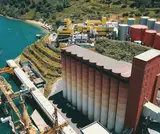
Tagol, an extraction and refining factory for vegetable oils
Precision agriculture, data and AI in food production
Where have you seen the greatest impact of innovation — in agronomy, industrial efficiency or product development — and what are Sovena’s main priorities today, particularly in areas such as precision agriculture, data and AI?
Innovation has a transversal impact on Sovena’s activity, being reflected across the entire value chain.
In agriculture, there is an increasing integration of data in operations management, particularly through the monitoring of variables such as soil moisture, weather conditions and plant water status, enabling more efficient and tailored resource management.
At the industrial and operational level, innovation translates into increased efficiency and continuous process improvement, while in the product dimension it materialises in adapting the offer to market needs.
More than a specific domain, innovation is now a structural element in how Sovena manages its operations and positions itself for the future.
Looking ahead, where do you see the greatest opportunities for value creation in the edible oils and food ingredients sector?
We know that consumer eating habits evolve over time. However, there are variables that will always remain important: taste and health. I believe we are in the right categories to continue investing and creating value for the company and its stakeholders.
Leadership and long-term value creation
In a global, demanding and rapidly evolving sector, what leadership principles do you consider critical to ensure consistent execution, team alignment and sustainable long-term value creation?
I believe leadership should be based on three fundamental principles: clarity of direction, consistency in execution and the ability to adapt. In times of uncertainty, it is essential that organisations know where they are heading, what their priorities are and how to translate strategy into action, ensuring internal alignment, operational discipline and consistency in decision-making.
This consistency is only possible when there is a clear investment in people. Skills development, continuous learning, well-being and inclusion are now critical dimensions in preparing teams to respond to the challenges of a transforming economy.
As a member of the Board of the Business Roundtable Portugal (BRP), I share the conviction that Portugal’s economic growth starts with people — their development, preparedness and ability to contribute to more competitive and sustainable organisations. Ultimately, leadership is about creating the conditions for teams to be aligned, empowered and motivated to generate long-term value.
About Sovena Group
Sovena Group s a Portuguese agribusiness and food company recognized as one of the world’s leading players in olive oil and edible oils, operating across the entire value chain — from agriculture and sourcing to extraction, refining, packaging and global distribution.
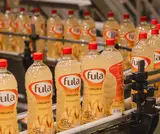
With more than €1.6 billion in revenue, operations across 5 continents and exports to over 70 countries, the group combines international scale with strong local brands such as Oliveira da Serra, Fula and Andorinha.
Sovena is also the world’s largest supplier of private label olive oil and has been expanding beyond traditional oils into areas such as avocado oil, precision agriculture and sustainable food production, supported by a strong focus on innovation, technology and ESG-driven practices.
Interesting facts
- In 2023, Sovena expanded into avocado oil through a dedicated extraction facility in Colombia, diversifying beyond traditional olive and vegetable oils.
- Sovena also manages large-scale agricultural operations across olive groves, oilseed and almond cultivation.
- Sovena’s agriculture strategy is strongly technology-driven, combining precision farming, drone and satellite monitoring, smart irrigation, predictive analytics and testing of new crop varieties.
- Sustainability is a central focus, supported by 98% renewable electricity worldwide, FSA Gold certification across all farms and sustainability training for over 90% of managers.
- Several Sovena brands hold leading market positions, including Oliveira da Serra, the most awarded Portuguese olive oil brand globally, Fula in Portugal and Andorinha in Brazil.